Dressing for a Dress Code Nobody Explains (Reading the Room at Work)
Almost no office writes down what to wear any more, which sounds liberating until your first week, when you realise there is absolutely a code — it is just unwritten. Here is why that is, how to read the room, and how to build a uniform that answers it.

Why Modern Work Dress Codes Are Unwritten
The unspoken standard: the the-formal-codes-have-gone (the written dress codes having largely disappeared from the office-outfit logic — the codes-have-gone), the the-but-a-code-still-exists (the an unwritten code still absolutely operating from the modern-workwear logic — the code-still-exists), the the-it-varies-by-workplace (the the code differing enormously between workplaces from the office-outfit logic — the varies-by-workplace), the the-you-have-to-read-it (the having to read it rather than be told it from the modern-workwear logic — the read-it-yourself), the the-getting-it-wrong-is-visible (the misreading it being immediately visible from the elevated-workwear logic — the visibly-wrong), and the reframe (the modern work dress code as unwritten rather than absent — a real standard you have to read rather than be told).

How to Read the Room
Decoding the code: the the-watch-the-people-a-level-above (the observing how people a level above you dress from the modern-workwear logic — the level-above), the the-note-the-formality-range (the noting the range between the most and least formal from the office-outfit logic — the formality-range), the the-aim-just-above-the-median (the dressing slightly above the median, not far above from the elevated-workwear logic — the just-above-median), the the-note-what-never-appears (the noticing what nobody ever wears from the office-outfit logic — the what-never-appears), the the-client-days-are-different (the client-facing days having a separate standard from the workwear-capsule logic — the client-days), the the-industry-norms-vary (the different industries running different codes from the modern-workwear logic — the industry-norms), the the-observe-before-you-commit (the observing a few weeks before overhauling from the workwear-capsule logic — the observe-first), and the the-fit-and-polish-read-everywhere (the good fit and polish reading well in any code from the elevated-workwear logic — the fit-reads-everywhere).
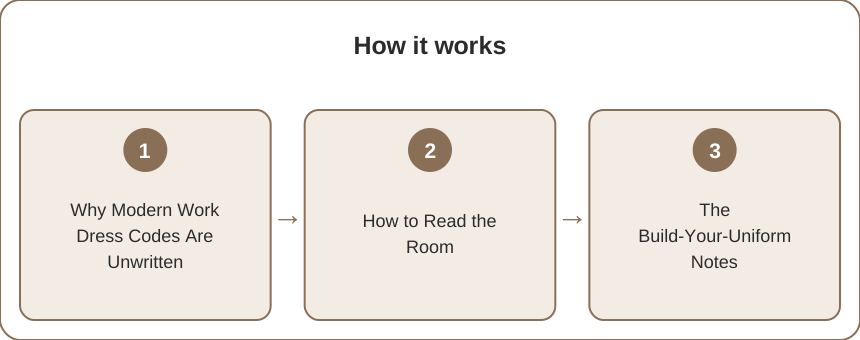
The Build-Your-Uniform Notes
Answering the code: the the-a-repeatable-formula (the a repeatable outfit formula for work days from the workwear-capsule logic — the repeatable-formula), the the-a-tight-capsule (the a tight capsule of pieces that all combine from the workwear-capsule logic — the tight-capsule), the the-one-elevated-layer (the one elevated layer — a blazer, a good knit — lifting anything from the elevated-workwear logic — the one-elevated-layer), the the-fit-over-newness (the well-fitting old pieces beating ill-fitting new ones from the elevated-workwear logic — the fit-over-newness), the the-one-statement-piece (the one statement piece keeping the uniform from being dull from the statement-office logic — the one-statement), the the-comfortable-shoes-you-can-work-in (the shoes you can genuinely work in all day from the office-outfit logic — the workable-shoes), the the-reduce-the-daily-decision (the the uniform removing the daily decision entirely from the workwear-capsule logic — the remove-the-decision), and the frame (the work dress code as unwritten but real — read from the people around you, answered with a repeatable capsule uniform lifted by one elevated layer — reading the room at work. Watch how people a level above dress, aim just above the median, and build a repeatable capsule uniform with one elevated layer).
Almost no office writes down what to wear any more, which sounds liberating until your first week, when you realise there is absolutely a code — it is just unwritten. Modern codes are unwritten because formal codes have gone but a code still exists, it varies by workplace, you have to read it, and getting it wrong is visible. Read the room by watching people a level above, noting the formality range, aiming just above the median, noting what never appears, treating client days differently, knowing industry norms, observing before committing, and remembering fit and polish read everywhere. Build your uniform with a repeatable formula, a tight capsule, one elevated layer, fit over newness, one statement piece, comfortable shoes, and removing the daily decision. Reading the room at work.
Keep Reading
This article is for general styling and informational purposes only. Trends, sizing, availability and pricing may vary by brand and season.